

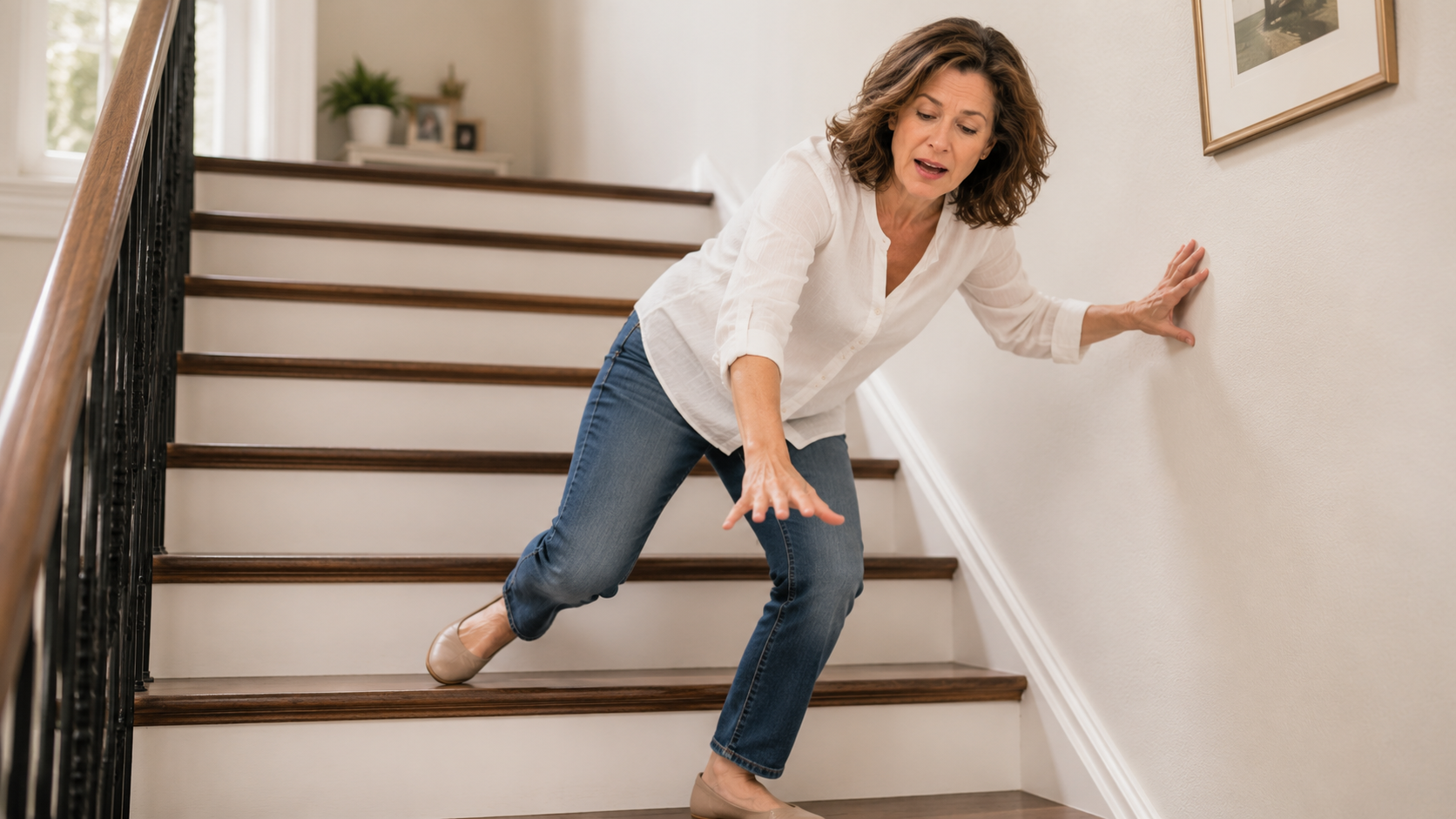
Have you noticed yourself pausing before you step off a curb? Reaching for a wall or a shopping cart — not because you need to, but just in case? What if that moment of hesitation is your body’s most honest signal that something needs your attention?
Most people don’t see it coming. They’re not walking the trails anymore. They’ve stopped gardening. They take the stairs one at a time, and somewhere along the way, that became normal. But here’s what I want you to notice: it wasn’t always that way.
14 million older adults fall each year in the U.S. — and 10,000 die as a result. Falls are the leading cause of injury death in adults over 65.
But here’s the part that gets overlooked: the fall didn’t start with the fall. It started with the hesitation.
What Your Body Is Actually Telling You?
As we age, three quiet changes increase fall risk — even on flat, familiar ground:
- Reduced foot strength. The small muscles that stabilize every step gradually weaken from lack of use.
- Limited toe spread. When toes can’t splay and grip, your base of support narrows — and balance suffers.
- Restricted sensory feedback. The bottom of your feet is a communication highway to your brain. When that signal gets muffled, your brain can’t coordinate a steady response.
Your brain senses this instability and does exactly what it’s designed to do: it steps in to protect you.
The result? Walking becomes careful. Deliberate. Draining. What used to be automatic now takes effort.
Does This Sound Familiar? Put a Check If You Notice This:
- You reach for the wall, a cart, or furniture before stepping
- You take stairs one at a time, or pause before descending
- You look down at the ground more than you used to
- Uneven surfaces, gravel, or grass feel uncertain underfoot
- You’ve stopped activities you used to enjoy because of balance concerns
If you checked even one of these, your body is giving you a signal worth responding to.
Why Most Shoes Make It Worse
If you’ve added supportive shoes to the mix — especially cushioned, heel-elevated ones — you may have made it harder without realizing it. Most “supportive” shoes don’t rebuild balance. They replace it. And in doing so, they slowly shut down the small stabilizing muscles your feet were designed to use.
Ask yourself: Does your footwear give your feet room to spread and grip? Does the sole of your foot allow you to feel the ground beneath you? Or is it absorbing the very feedback your nervous system needs to stabilize you?
Two Things Worth Trying
#1: What’s on your feet?
A zero-drop sole restores natural alignment. A wide toe box lets your toes spread and grip. Flexible, lightweight construction reactivates those small stabilizing muscles.
#2: How is your balance?
Balance is a neurological response. Supplements, stretching, and supportive footwear all play a role — but none of them directly communicate with the part of your brain that coordinates balance.
We’ve watched clients in our own office — people who were going down the stairs one careful step at a time — or walking down the hall with a shuffling gait. Or we’ve done a balance test (you can do that at home) to assess a person’s current balance.
What Should You Notice?
Start paying attention to the hesitations. Where do they show up? Before a step down? Turning in a parking lot? Getting out of the car? Those pauses are data — and they’re telling you something your body needs.
Let’s Play Notice and Discover!
Get some samples of the Liberty Patch and notice what shifts. Whether it’s the stairs, a walk around the block, or a morning in your garden — observe what becomes possible.
- Try going up and down your stairs before you make any change. Note how it feels. Then try the Liberty Patch — and go again. What’s different? That difference is worth paying attention to. That noticing is the beginning of your process.
- Do the balance test, then apply a Liberty Patch and see what you notice.
Click HERE to get samples of the Liberty Patch and see how much better you can instantly move and walk!